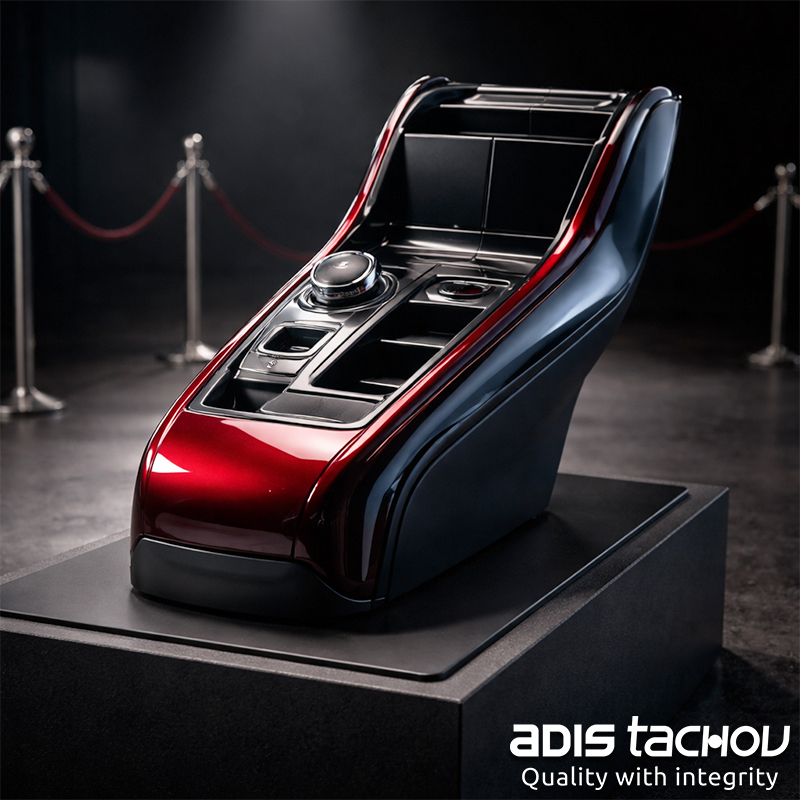
Some plastic parts deserve a spotlight long before they reach a production line. 🥇
Creating injection molded plastic prototypes before committing to full production is one of the most effective ways to reduce risk in product development, especially in automotive interiors.
By building prototypes using the same material and process planned for series production, designers and engineers can validate geometry, fit, function, and surface quality under real manufacturing conditions. Issues such as sink marks, warpage, shrinkage behavior, tolerance stack-up, and parting line placement become visible early, when changes are still manageable.
These prototypes also shift design discussions from theory to reality. Functional testing, durability checks, and ergonomic assessments can all be performed on parts that behave like production components, not approximations.
Beyond engineering validation, injection molded prototypes play a critical role in communication. When stakeholders can see and touch a realistic plastic part, confidence increases. Design intent becomes clearer, decisions accelerate, and alignment across engineering, purchasing, and management improves.
In short, plastic prototyping is not an extra step. It is a strategic investment that improves quality, shortens development cycles, and increases the likelihood that a part performs exactly as intended once production begins.
How are you using injection molded prototypes today, purely as test parts, or as decision-making tools across your organization?