The most revealing thing about an Andon system isn't the signal. It's what happens next.
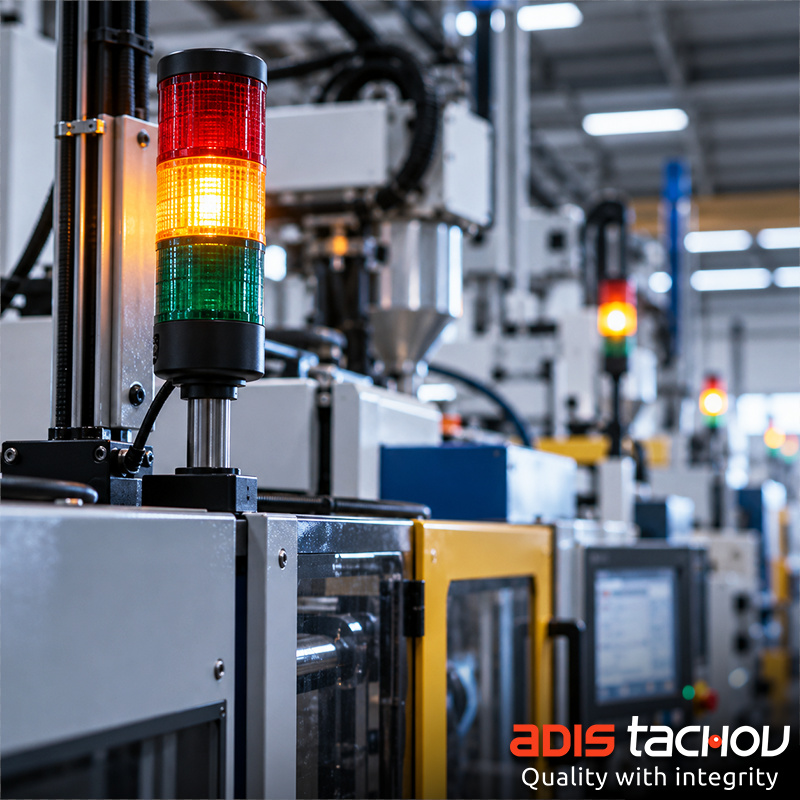
Most manufacturing professionals are familiar with Andon systems. A stack light changes colour, a production board flags an abnormality, or an operator calls for assistance. The technology is straightforward, and the principle has been part of lean manufacturing for decades.
But there's an interesting distinction between making a problem visible and creating an environment where people feel comfortable bringing it to everyone's attention.
Imagine two production teams using exactly the same system. In one, an alert triggers a quick conversation, support arrives, and the team works through the issue. In the other, people hesitate to raise concerns because they know it might disrupt production or lead to uncomfortable questions.
Same technology. Very different outcomes.
It's something we place considerable value on here at @ADIS. Visual management helps us stay aware of what's happening across production, but its real effectiveness depends on how people respond to what they're seeing.
An early warning gives the team a chance to understand what's changing and intervene before a small deviation becomes something more serious.
And there's another opportunity that's easy to overlook. If the same warning keeps appearing, perhaps the more useful question isn't how quickly we can clear it, but why it keeps returning.
Our co-owner and Managing Director, @Marc, captures this philosophy in a simple sentence:
"See them, address them, and learn from them quickly."
It's an attitude that's become deeply embedded in how our teams work. Because making problems visible is only the beginning. What matters is what we do with that information.