Some of the most expensive production problems are approved long before production ever starts.
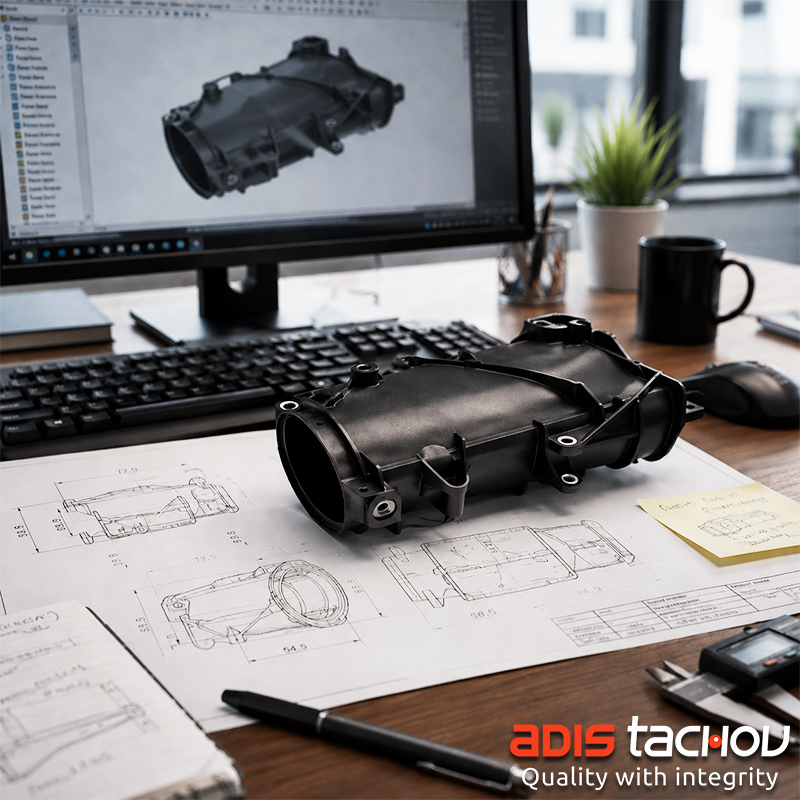
It’s often said that excellence begins at the drawing board, and in high volume manufacturing that idea carries weight. When millions of parts are expected to perform reliably across different climates, applications, and years of use, the design phase becomes far more than a technical checkpoint. It becomes one of the most influential stages in determining success.
Too often, manufacturing challenges are treated as production problems when many of them are actually design problems waiting to surface. A component that looks effective on screen may still create downstream issues involving moldability, cycle time, dimensional stability, assembly, or durability if those factors aren't considered early enough.
That’s why leading manufacturers place so much emphasis on design for manufacturability and early cross functional collaboration. Engineers, tooling specialists, and production teams working together from the outset can identify risks before steel is cut and before expensive corrections become necessary.
The benefits are practical and measurable.
First, early design refinement helps minimize production obstacles. Addressing potential weak points before launch reduces delays, improves process stability, and supports more predictable output.
Second, detailed design work strengthens quality control. Clear specifications, tighter tolerances, and validated assumptions make it easier to produce consistent parts at scale.
Third, better upfront engineering improves cost efficiency. Reducing unnecessary complexity, scrap, and rework protects both margins and timelines.
Companies like ADIS have long recognized that durable, repeatable manufacturing doesn't begin on the production floor. It begins with the decisions made long before the first shot is ever molded.
How early does manufacturing input enter your design process, and have you seen the difference it makes?