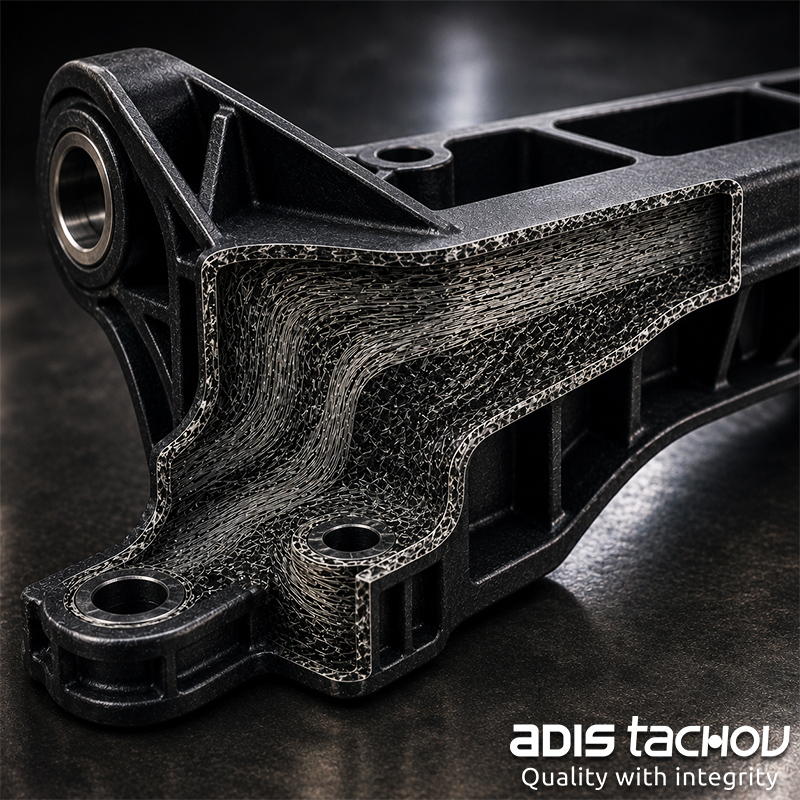
Behind every high-performance FRP component is an engineered pattern of fibre orientation that most people never see.
Fiber-reinforced plastics (FRPs) are reshaping what manufacturers can expect from polymer components, and they've become a valuable part of our engineering toolbox here at ADIS.
Enabling lighter, stronger, and more durable solutions for demanding applications, FRPs combine a polymer matrix with reinforcing fibres such as glass or carbon. The result is a material that delivers high stiffness, excellent dimensional stability, and outstanding resistance to impact and fatigue, all while helping to reduce weight and control costs.
For our customers, this means components that continue performing where traditional plastics reach their limits. We use FRPs in projects where:
• Structural strength is critical
• Thermal stability must be maintained
• Long-term durability is non-negotiable
• Metal replacement can reduce weight or simplify assembly
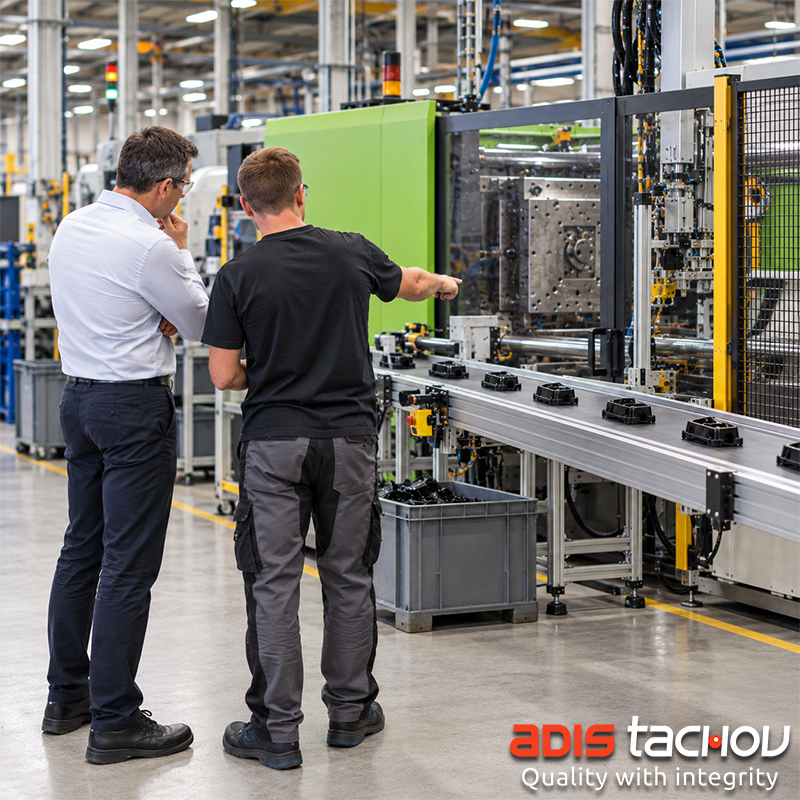
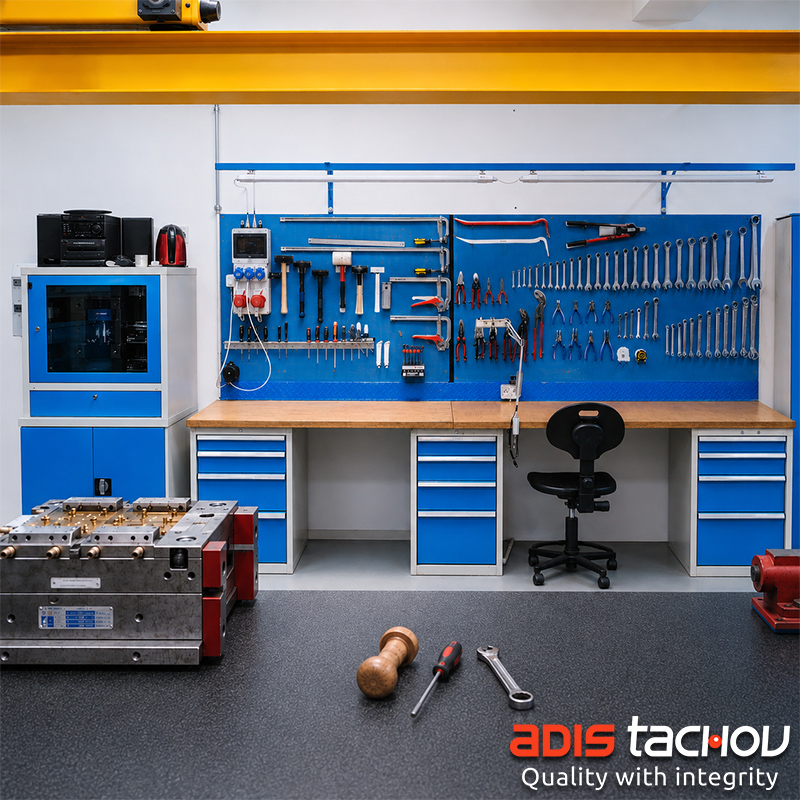
From CAD modelling to cavity optimisation, our tooling and process engineers ensure FRP components are manufactured with precision and repeatability. The right fibre orientation, gate strategy, and cooling design can dramatically influence the final part's performance, and that's where our experience makes a measurable difference.
For OEMs looking to push performance further without adding unnecessary complexity, FRPs offer a compelling solution. It's just one of the many advanced manufacturing capabilities we deliver to the automotive industry every day.
Have you replaced conventional plastics or metal components with FRPs in your own applications? What drove that decision?
Share your experience in the comments. We'd love to hear what's delivering the biggest value in your projects.